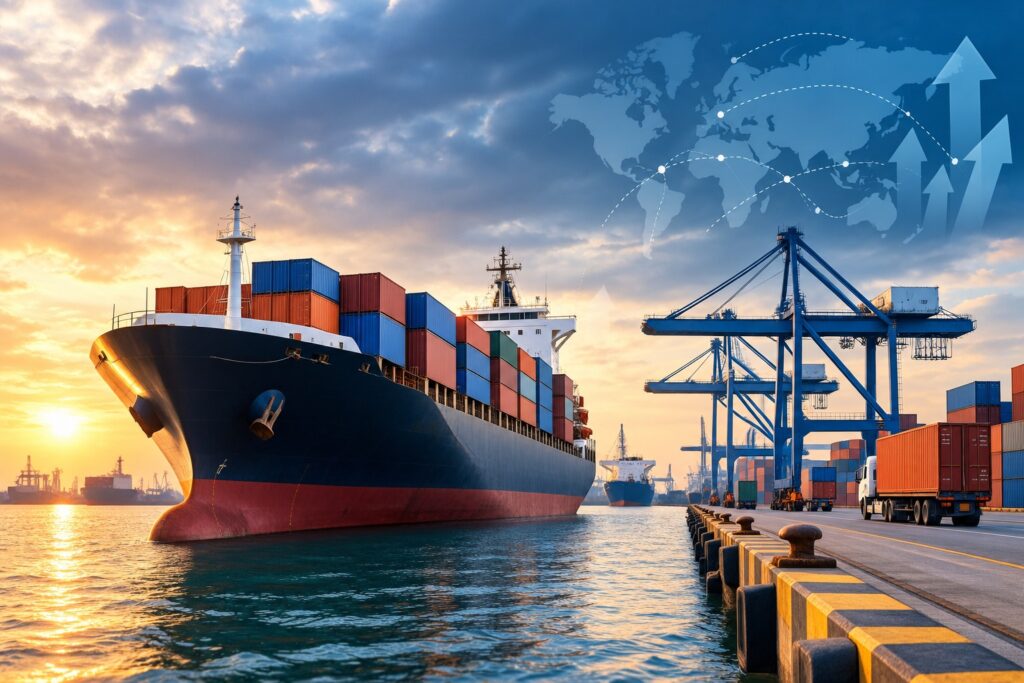
Aceh – Indonesia, Jakarta (Waspada Aceh) – A maritime logistics crisis characterized by a scarcity of domestic vessels, soaring sea freight rates, and port congestion threatens to trigger a surge in goods prices and squeeze business competitiveness in Indonesia.
Public policy observer from the Center of Economic and Law Studies (CELIOS), Gusti Raganata, warned that the issue must be handled systemically to avoid further burdening the public and business operators.
“If this condition continues without intervention, logistics costs will keep rising, and the impact will spill over into various sectors,” Gusti said in a written statement received by Waspadaaceh.com on Friday (9/10/2026).
According to Gusti, domestic logistics pressure comes amid rising global shipping demand. Since mid-2026, several vessels reportedly shifted from domestic routes, such as Surabaya–Makassar, to international routes, including Singapore–India.
This situation was accompanied by increases in passenger, container, and general cargo freight rates that took effect on July 1, 2026. Meanwhile, domestic shipping costs reportedly surged by double digits, with transportation expenses absorbing 40–50 percent of operational costs for courier companies.
The pressure is further exacerbated by port capacity and infrastructure challenges across several regions.
At Belawan Port in Medan, shallow waters are reportedly restricting the size of ships that can dock. Vessel capacity, which previously ranged from 400–1,000 TEUs, has reportedly shrunk to 200–300 TEUs.
Meanwhile, the Cakung–Cilincing corridor near Tanjung Priok Port in Jakarta is overburdened by around 5,000–7,000 trucks daily. At Tanjung Perak Port in Surabaya, average vessel queue times reached 30 hours in May 2026.
Road access issues also affect goods distribution. In Kendari, Southeast Sulawesi, road damage reportedly left truck drivers unable to operate for up to three days, resulting in losses of IDR 2 million to IDR 3 million per incident.
Gusti also highlighted the rising Yard Occupancy Ratio (YOR) at Tanjung Priok’s domestic terminal, which rose from 56 percent in January to 72 percent in May 2026.
He noted that these conditions point to structural flaws in the domestic logistics chain that cannot be resolved solely through port operational enhancements.
Threats to MSMEs and Supply Chains
Gusti stated that escalating logistics expenses could put immense pressure on micro, small, and medium enterprises (MSMEs), particularly those relying on inter-island shipping.
Higher distribution costs risk driving up production costs and selling prices, making MSME products less competitive. In the retail sector, logistics disruptions could disrupt basic commodity supplies and exacerbate inflationary pressures.
Beyond impacting the public and business sector, port congestion risks damaging Indonesia’s image as a regional logistics hub. Over the long term, this could influence investment decisions in the manufacturing and trade sectors.
Gusti identified several interrelated factors behind the maritime logistics challenges, including global geopolitical turmoil, domestic shipping fleet reliance on imported vessels, backhaul imbalances, limited port productivity, poor hinterland connectivity, and cross-agency regulatory issues.
He also pointed out international shipping disruptions. A 52 percent decline in Suez Canal traffic in 2025, according to data cited in his statement, underscores the strain on global maritime systems.
On the other hand, Gusti acknowledged that PT Pelabuhan Indonesia (Pelindo) has undertaken several mitigation steps, including adding heavy equipment, expanding digital systems, and recording a 7 percent year-on-year growth in container volume.
However, he believes these efforts remain insufficient because logistics issues span multiple sectors and institutions.
To resolve the crisis, Gusti urged the government, especially the Ministry of Transportation, to strengthen coordination and accelerate improvements to the national maritime logistics system.
Proposed measures include modernizing cabotage policies and commercial fleet financing schemes, enforcing domestic manifest rules to address backhaul imbalances, and accelerating port dredging and capacity expansion through scheduled planning.
He also advocated for the establishment of a permanent cross-agency coordination forum with binding authority, ensuring that solutions do not rely on temporary emergency meetings.
“Without systemic and integrated action, this national logistics crisis time bomb risks exploding in the form of price spikes that burden the wider public,” Gusti stated.
He emphasized that a comprehensive overhaul of logistics is necessary to keep inter-regional goods distribution flowing, control business costs, and maintain price stability for daily necessities. (*)