Aceh – Indonesia, Amid the growth of digital media and changes to Indonesian criminal law, the line between press freedom, ethical violations, press disputes, and criminal offenses has become an increasingly vital issue for media professionals to understand.
Addressing this issue, the Forum of Media Leaders (FPRMI) Aceh will host a panel discussion from 09.00 to 12.30 WIB at Anjong Mon Mata, Banda Aceh.
This discussion is crucial because journalism today involves not only accuracy and reporting ethics, but also increasingly complex legal consequences.
Furthermore, journalistic work published via online media and social platforms can spread within seconds, reaching the public on a massive scale.
Under these circumstances, errors in reporting, verification, sourcing, writing, and dissemination risk triggering legal complications. However, not every journalistic mistake automatically constitutes a criminal act.
This central question will be dissected in FPRMI Aceh’s discussion: specifically, where lies the boundary between press freedom, ethical breaches, press disputes, and criminal liability?
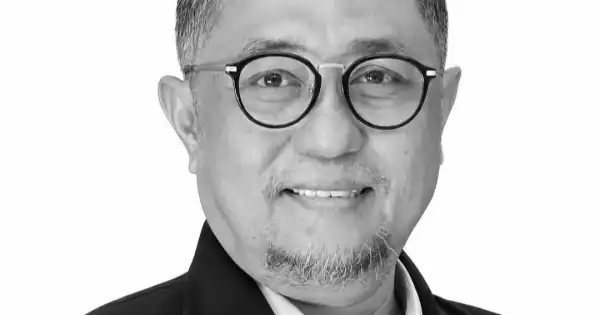
The Chairman of FPRMI Aceh, Muhammad Saleh, stated that grasping these boundaries is essential to safeguard press freedom while maintaining legal accountability and journalistic professionalism.
“The press is a vital pillar of democracy. Press freedom must be preserved and respected, but that freedom must go hand in hand with professional responsibility, the journalistic code of ethics, and statutory provisions,” Saleh noted, accompanied by FPRMI Aceh Secretary Afrizal, on Monday (5/10/2026) in Banda Aceh.
According to him, rapid advancements in digital technology present greater challenges for media professionals. While speed is a top demand for news outlets, it must never compromise verification and accuracy.
“Publishing speed should not lead to bypassing verification. Journalists must understand their legal rights and protections, but they must also recognize their responsibilities and legal limits when carrying out news duties,” he stressed.
To address this, Saleh explained that the discussion brings together speakers from diverse backgrounds so that potential criminal liability in journalistic works is not viewed solely from the media’s perspective.
Among the key speakers, Head of the PR Division of the Indonesian National Police Headquarters, Inspector General Johnny Edison Isir, S.I.K., M.T.C.P., will address “Journalistic Products and Potential Criminal Liability: The Police Perspective on Safeguarding Press Freedom and Legal Certainty.”
Meanwhile, Member of Commission III of the Indonesian House of Representatives (DPR RI), Dr. M. Nasir Djamil, will explore “Journalistic Products Amid Criminal Law Reforms: Limits of Press Freedom and Legal Accountability.”
From an academic viewpoint, Dr. Yusrizal, S.H., M.H., an academic from Malikussaleh University Lhokseumawe, will analyze “Potential Criminal Threats in Journalistic Products: A Criminal Law and Press Law Perspective.”
Representing practical journalism, Untung Kurniadi, Chairman of the Advisory Board of PP-FPRMI, will discuss “Common Errors in the News Coverage Process.”
“So far, all key speakers have confirmed their attendance,” Saleh confirmed.
Saleh expressed hope that bringing together representatives from the Police, DPR RI, academia, and media practice will foster a balanced and constructive dialogue.
“This is what we want to encourage. The press needs to understand law enforcement’s perspective, while law enforcement officers must understand the nature of journalistic work. The same applies to legislators and academics. Through this dialogue, we hope to eliminate misunderstandings in handling news-related issues,” he explained.
FPRMI Aceh emphasized that the event is not intended to curb press freedom or intimidate journalists with criminal threats.
On the contrary, the program aims to serve as an educational space so journalists and media managers gain better legal awareness in their profession. “Legal understanding is not meant to restrict the press. By understanding the law, journalists can work more professionally and know how to secure protection while performing journalistic duties in accordance with the rules,” Saleh stated.
He noted that problems become more complicated when a journalistic product is treated like ordinary social media content, ignoring the journalistic process behind it.
Therefore, he emphasized the need for a clear understanding of the characteristics of journalistic work, press workflow, codes of ethics, the right of reply, the right of correction, and press dispute resolution mechanisms, alongside identifying when an issue crosses into criminal law.
“This goes beyond journalists. It touches on how democracy functions, how the public receives information, how the press exercises social control, and how the law guarantees certainty without hindering press freedom,” he asserted.
Accordingly, the event is open to various stakeholders, particularly chief editors of media outlets in Aceh, journalists, public relations personnel from the Aceh Provincial Government and regency or city administrations, PR officers from DPRA and DPRK across Aceh, heads of journalist and civil society organizations, university students, as well as PR divisions of law enforcement agencies and the military.
Secretary of FPRMI Aceh and Event Committee Chairman, Afrizal, mentioned that registration is open until October 10, 2026. “Registration can be done through me as Secretary of FPRMI Aceh and Committee Chairman via phone/WhatsApp at 081263203737, until 16.00 WIB,” Afrizal said.
He emphasized that the event is free of charge, with certificates provided for participants. FPRMI Aceh hopes the forum will foster a shared consensus that press freedom and legal enforcement are not mutually exclusive.
“We do not want journalists to fear reporting due to the shadow of criminal threats. But we also do not want press freedom to be interpreted as freedom without limits,” Saleh added.
According to him, the solution lies in professionalism, adherence to ethical codes, legal literacy, and healthy communication between the press and stakeholders.
“The faster information spreads, the greater the media’s responsibility to ensure that information is true, accurate, balanced, and accountable. Therefore, this discussion is essential not only for journalists, but for anyone who cares about press freedom and democracy,” he concluded. []