Aceh – Indonesia, Banda Aceh (Waspada Aceh) – The Aceh Government has begun pushing for a shift in economic development, moving away from reliance on raw commodity exports toward downstream processing and industrialization.
This step is considered crucial to ensure Aceh’s rich natural resources do not merely yield raw materials, but also create added value, job opportunities, and improve local public welfare.
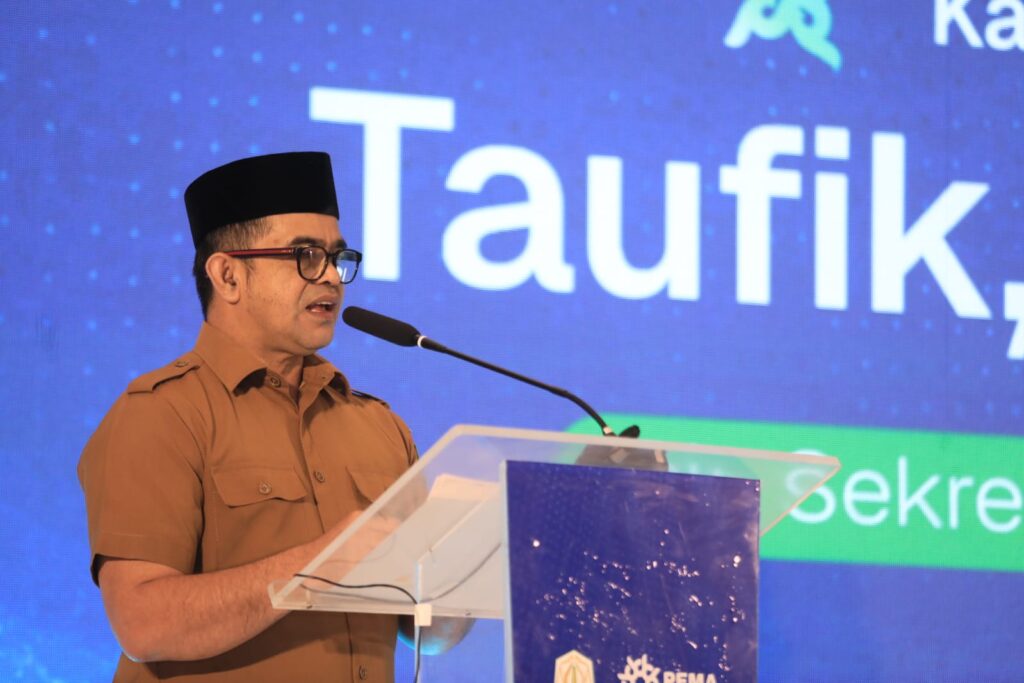
This was stated by Acting Regional Secretary of Aceh, Taufik, during the 2026 Aceh Economic Development Forum (AEDF) hosted by PT Pembangunan Aceh (PEMA) Perseroda at the Hermes Hotel Banda Aceh on Tuesday (6/10/2026).
AEDF 2026 carried the theme “Accelerating Investment and New Industrial Era in Aceh.”
Taufik mentioned that Aceh possesses immense potential across various sectors, ranging from agriculture, plantations, marine, and energy to tourism. However, these resources must be managed professionally and sustainably to generate greater economic benefits for the community.
“We must not allow Aceh’s resources to leave as raw materials while the added value and job opportunities are created in other regions,” said Taufik.
According to him, agricultural, plantation, fishery, energy, and other natural resources should increasingly be processed within Aceh. This way, a larger share of the value chain from various commodities can be enjoyed locally, ensuring the forum goes beyond an exchange of ideas to yield a concrete investment development roadmap.
The roadmap, he added, needs to encompass investment opportunities, regulatory certainty, streamlined licensing, infrastructure readiness, as well as collaboration among the government, business sector, academia, banking, and the public.
Meanwhile, the President Director of PT PEMA Perseroda, Faisal Ilyas, stated that while Aceh holds vast resources, the majority have yet to deliver maximum added value for the region.
“We have vast seas, yet the added value of our marine resources is enjoyed by outsiders. We have agricultural and plantation commodities, but what we sell are raw goods,” Faisal remarked.
He noted that Aceh’s primary challenge today is transforming these resource potentials into economic strength through investment and industrialization.
“Through this forum, we will draft a roadmap for what we will undertake over the next 10 to 20 years,” he said.
Faisal highlighted that PEMA holds a responsibility as one of the regional economic instruments. Accumulatively, PEMA has deposited dividends totaling IDR 128 billion to the Aceh Government.
Moving forward, PEMA aims to increase its contribution to Aceh’s Regional Original Revenue (PAD), especially amid local fiscal conditions and reduced central government transfers.
6 Strategic Collaborations
AEDF 2026 also served as a momentum for the signing of several investment and industrial development agreements.
The first collaboration was established with Tigallapan Investama through a joint study on renewable energy development potential.
Furthermore, a strategic partnership was formed with Kedah Agro Ausin Berhad covering agro-industry development, trade, agro-tourism, logistics, technology, livestock, and human resources.
PEMA also partnered with Citaglobal for a joint study on the development potential of sustainable energy and fuels.
Another agreement was signed with PT Banda Sentra Nasional (BSNS) for telecommunications infrastructure development in Aceh.
Meanwhile, an MoU and soft launching of a lightweight steel factory were conducted with PT Indo Surya Galvalume (ISG). This cooperation also included an MoU and soft launching for hebel and precast brick tenants.
This series of collaborations is expected to serve as a stepping stone toward steering Aceh into a new industrial era by optimizing regional resources and attracting investments capable of creating added value within Aceh.
Consequently, Aceh will no longer remain merely a raw material producing region, but will build processing industries that deliver greater economic benefits to the public and the region. (*)