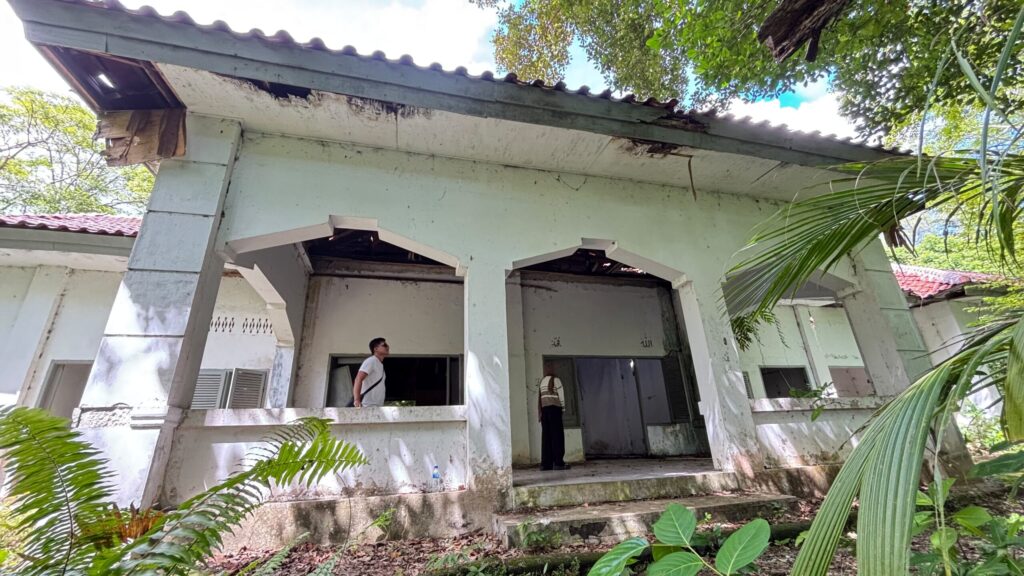
Now, time shows on almost every part of it. The wall paint is fading. The floors are cracked. Several roof sections are damaged.
Aceh – Indonesia, Rubiah Island, Sabang, welcomes tourists with clear waters and clusters of trees. However, the journey to one of the historical sites on the island offers a different view.
From the pier, about 100 meters toward the former Hajj Quarantine complex, visitors walk along a concrete path and a flight of stairs. At several points, piles of trash are visible along the trail.
Bushes grow along the side of the path. After a few minutes of walking, a inscription serves as a marker for the historical area.
Behind the trees stands a white building featuring Dutch colonial architecture. The building was once part of a Hajj pilgrims’ quarantine complex built around 1920.
Now, time shows on almost every part of it. The wall paint is fading. The floors are cracked. Several roof sections are damaged. Vines grow around the walls and the yard of the building.
About 20 meters from the first building, there is another building with eight rooms. Weeds as tall as an adult’s waist grow between the two structures.
Not much remains inside. The rooms are empty. Dust clings to the floors. Some parts of the roof have suffered damage.
In an area known as one of Sabang’s marine tourism destinations, the historical site seems to sit on a different path from the bustling tourism of Rubiah Island.
Resa Rianda, a resident of Sabang, revisited the area after having visited several years earlier. He found that the site’s condition remained largely unchanged.
“I have been here before. It’s sad to see its condition is still like this,” Resa said.
According to him, Rubiah Island has a longer story than just marine tourism. The Hajj Quarantine site, he said, could be developed as part of historical and religious tourism.
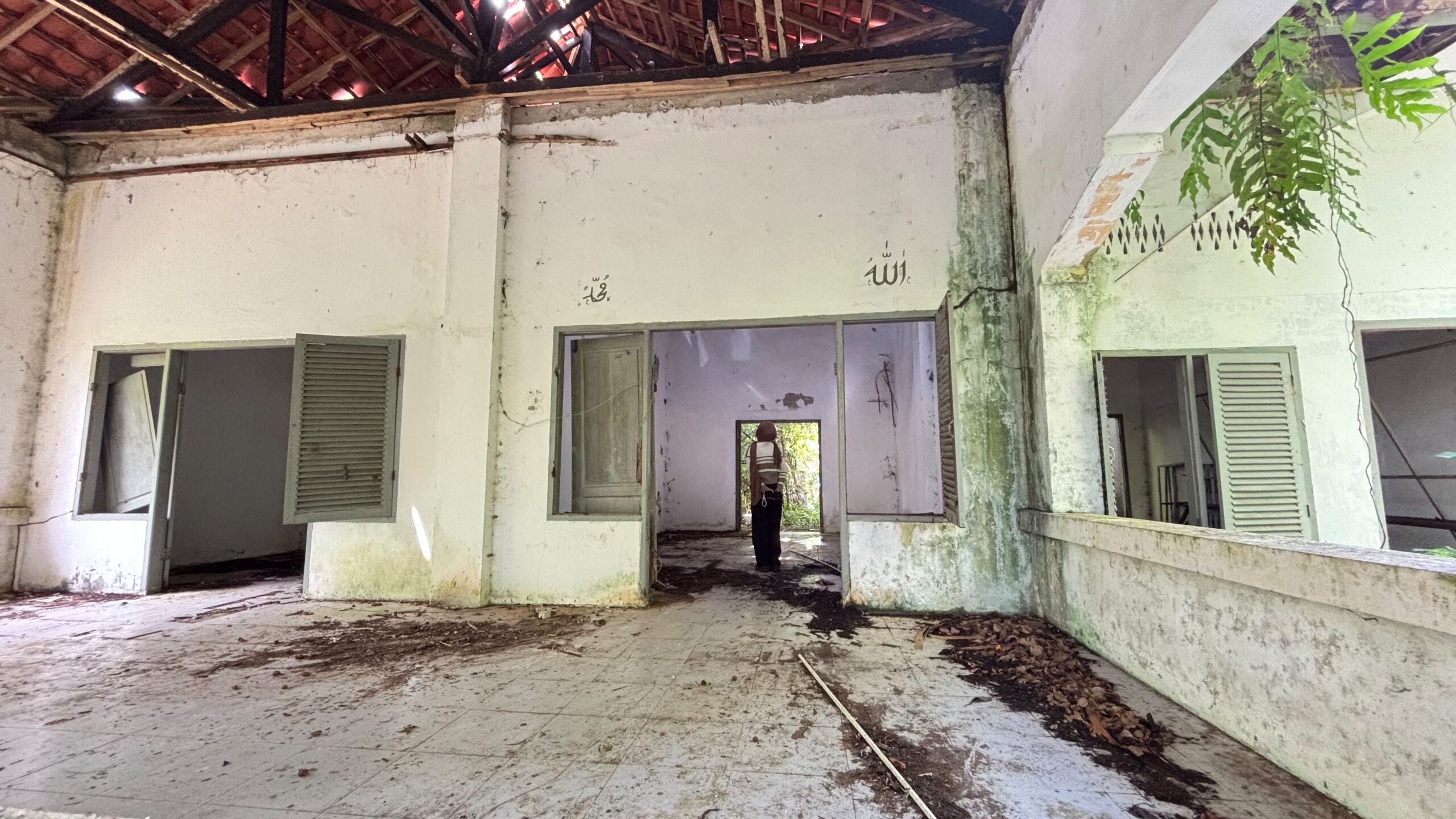
He hopes that maintenance will be carried out not only on the buildings, but also on the area as a whole.
“The hope is for it to be maintained and fixed. It’s a shame if a historical site like this is neglected, especially when it could become religious and historical tourism in Sabang,” he said.
The entrance arch reading “Rubiah” also caught Resa’s attention. Parts of the destination’s signage facility appeared damaged.
For Resa, improvements do not mean altering the old look of the area. What is needed is proper maintenance so that the site and its surrounding environment remain suitable for visitors.
40 Days Waiting to Return Home
The Rubiah Island Hajj Quarantine complex was built by the Dutch colonial government around 1920. The complex was equipped with various facilities, including a clinic, lodging facilities, a water room, and electrical facilities.
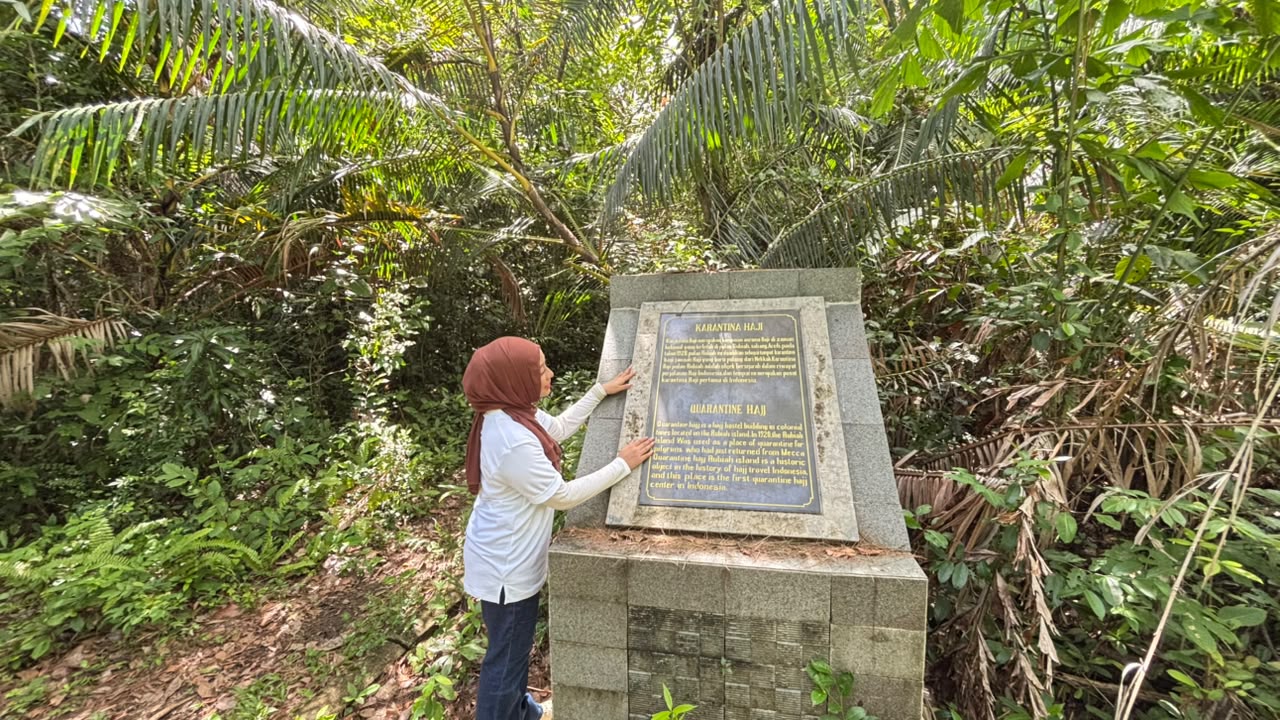
Hajj pilgrims returning from the Holy Land by ship were not immediately allowed to return to their hometowns.
They had to undergo quarantine for about 40 days. “Back then, there were no vaccines like today. So people returning from overseas carried diseases, making quarantine mandatory,” said Tgk Zulkufli, a local resident.
After being declared healthy and free of disease, pilgrims were permitted to continue their journey to their areas of origin.
The pilgrims undergoing quarantine on Rubiah Island did not come only from Aceh. Several pilgrims from other regions in Sumatra were also stationed there.
The Dutch chose Rubiah Island because its location had a port accessible to large ships. According to him, the construction of the complex was also tied to the colonial government’s political and economic interests in Aceh.
After the Japanese arrived in 1942, the complex ceased its original function. The quarantine buildings were subsequently used as military barracks and headquarters.
A century later, some of the buildings still stand. However, their existence now faces a simple yet fundamental issue: maintenance.
The trash found along the path to the site, weeds covering parts of the area, a damaged entrance arch, and buildings with rotting floors and roofs show that this historical story has not yet found its proper place in Rubiah Island’s tourism management.
Yet, for tourists like Resa, a trip to Rubiah Island does not have to end with the sea and coral reefs.
There is history waiting to be told. And the old building still stands, waiting to be cared for. (*)